

In the veterinary world, trust is everything. Horse owners entrust you with their most prized companions, athletes worth thousands or even millions of dollars, and beloved family members that have been part of their lives for years. That trust is built not just through excellent medical care, but through consistent, clear, and professional communication. Yet for many equine veterinary practices, communication often falls through the cracks amid the chaos of emergency calls, farm visits, and packed appointment schedules.
What if every client received timely reminders? What if treatment updates or invoices were easy to send or share with just a few clicks at the end of a visit? This isn’t a far-off dream. Modern veterinary practice management software makes all of this possible, transforming how practices communicate with clients and strengthening relationships in the process.
Let’s explore how the right veterinary computer software revolutionizes client communication and why practices that embrace these tools gain a significant competitive advantage in an increasingly demanding market.
The Communication Gap in Traditional Practice Management
Think about the last time a client called asking about their horse’s vaccination history, and someone had to dig through paper files or search multiple computer systems to find the information. Or consider the appointments that were missed because reminder calls didn’t get made during a busy week. These communication breakdowns don’t just frustrate clients; they represent lost revenue, decreased client satisfaction, and potential medical risks.
Traditional practice management methods, whether paper-based or outdated digital systems, create communication bottlenecks. Staff members spend hours doing reminders on various visits. Important follow-up instructions get lost in translation. Clients struggle to remember complex medication schedules. Meanwhile, your team feels overwhelmed trying to maintain personal connections with dozens or hundreds of clients while managing the clinical demands of veterinary medicine.
The reality is that modern horse owners expect the same level of communication and convenience from their veterinary practice that they receive from every other service provider in their lives. They book restaurant reservations on their phones, receive automated shipping updates, and access their medical records through patient portals. They expect similar capabilities from their equine veterinarian, and practices that can’t meet these expectations risk losing clients to competitors who can.
Automated Reminders That Actually Work
One of the most powerful features of veterinary practice management software is automated appointment and treatment reminders. Instead of relying on staff to manually call each client, the software sends automatic reminders via email. These reminders go out in a timely manner for any type of appointment or follow-up visit schedule, giving clients plenty of time to prepare.
But effective equine vet software goes beyond simple appointment reminders. It can send automated reminders for vaccinations, dental work, deworming schedules, and any other preventive care protocols specific to each horse. A three-year-old performance horse might need quarterly lameness evaluations, while a retired pasture companion requires only annual wellness visits. The software tracks these individual needs and ensures clients receive timely reminders for each animal in their care.
The impact on practice efficiency and client satisfaction is dramatic. No-show rates typically drop by 20% to 40% when practices implement automated reminders. Clients appreciate the convenience and professionalism of receiving timely notifications. Staff members are freed from the tedious task of making reminder calls, allowing them to focus on more valuable client interactions and clinical support.
Instant Access to Complete Medical Records
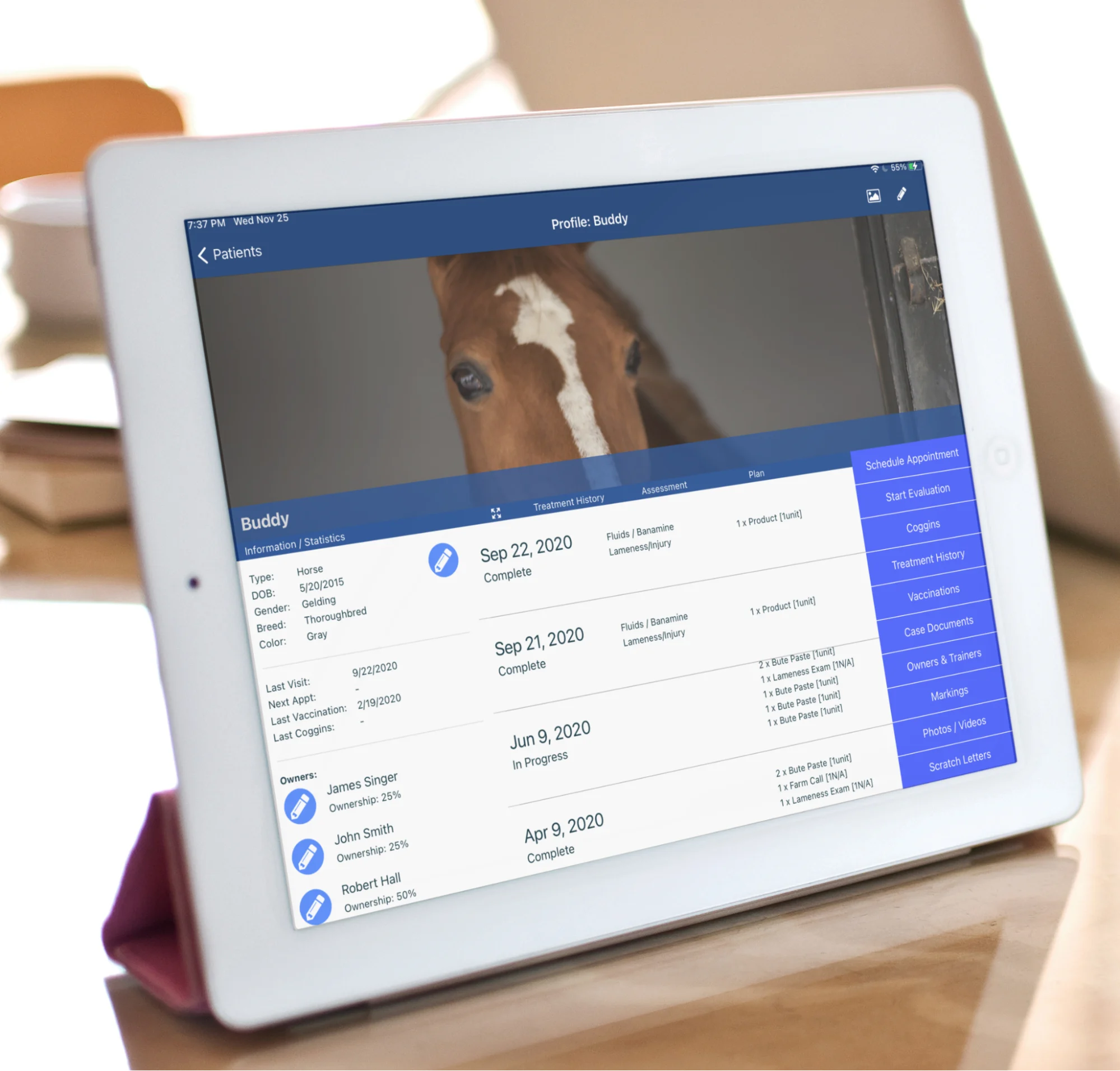
How many times have you been on a farm call and wished you had immediate access to a horse’s previous lab results or radiographs? Or received a late-night emergency call from a client asking about their horse’s medication history? Veterinary practice management software solves these problems by providing instant access to complete medical records from any device, anywhere.
For equine practices that serve performance horses competing at shows or events, this capability is particularly valuable. Owners, trainers, and even other veterinarians can access necessary documentation quickly when needed, streamlining pre-purchase exams, insurance claims, and competition requirements. The practice that can provide instant, organized access to medical information stands out as professional and client-focused.

Real-Time Communication During Treatment
Emergency calls and complex cases require frequent communication with clients, but playing phone tag wastes time and increases anxiety for worried horse owners. Modern veterinary computer software often includes features that allow communication between veterinarians and clients. You can send treatment updates and answer questions without the back-and-forth of phone calls. ThoroVet even allows you to share most documents via text message or through third party apps such as Messenger or WhatsApp.
Imagine performing an exam and being able to send the owner an update, discharge summary, and any important records at the end of the visit. Or conducting a lameness evaluation and sharing a short video of the horse’s movement with notes about your findings. These real-time communications provide reassurance and keep clients informed throughout their horse’s care.
Documentation of these communications within the practice management system also creates a clear record of what information was shared and when. This protects the practice legally while ensuring continuity of care even when multiple veterinarians or staff members are involved in a case.
Streamlined Billing and Payment Communication
Few aspects of client communication are more sensitive than billing. Misunderstandings about charges, delays in invoicing, and confusing itemized bills can damage even the strongest client relationships. Veterinary practice management software transforms this potentially difficult conversation into a smooth, transparent process.
The software generates clear, detailed invoices that clients can access immediately after appointments or procedures, or when you close out the invoice at the end of the day or your billing period. They can see exactly what services were provided, what medications were dispensed, and how charges were calculated. Many systems integrate with payment processing, such as a sync with QuickBooks Online or Stripe, allowing clients to pay online via links sent to their email or phone.
This transparency in billing communication reduces disputes and speeds payment collection. Clients appreciate knowing costs upfront and having multiple convenient payment options. Practices benefit from faster cash flow and fewer awkward conversations about overdue balances. Automated payment reminders for outstanding invoices can be sent at predetermined intervals, handling this sensitive communication professionally and consistently.
Targeted Client Education and Marketing
Effective equine vet software doesn’t just facilitate transactional communication; it enables practices to provide ongoing value through targeted education and outreach. The software can segment clients based on various factors such as the type of horses they own, services they typically use, or their location, allowing practices to send relevant information to specific groups.
For example, you might send seasonal reminders about vaccine-preventable diseases to all clients in the spring, educational content about colic prevention to owners of horses on stall rest, or information about new services like regenerative therapies to clients whose horses have chronic lameness issues. This targeted approach ensures clients receive information that’s actually relevant to them, rather than generic mass emails that get ignored or deleted.
This capability turns your practice management software into a relationship-building tool. Clients see you as a trusted advisor who provides valuable information beyond just treating illness and injury. Regular educational communication keeps your practice top-of-mind and positions you as the go-to resource for all aspects of equine health.
Team Collaboration That Improves Client Experience
Behind every great client communication is a well-coordinated team. Veterinary practice management software creates a centralized hub where everyone from veterinarians to technicians to administrative staff can access client information, see communication history, and add notes about interactions. This visibility prevents the common scenario where clients have to repeat information to multiple staff members or receive conflicting messages from different team members.
When your receptionist can see that Dr. Smith discussed changing a horse’s medication during yesterday’s farm call, she can answer the owner’s follow-up question confidently without having to track down the veterinarian. When your veterinarians can see notes from previous conversations with a client, they can reference those discussions and maintain continuity in the relationship. This seamless coordination makes clients feel truly cared for rather than like just another number.
Building Long-Term Client Loyalty
The cumulative effect of all these communication improvements is profound. Clients who receive consistent reminders are more likely to maintain preventive care schedules, leading to healthier horses and stronger lifetime value for your practice. Transparent, accessible medical records build trust and confidence in your care. Real-time updates during treatment provide peace of mind during stressful situations.
Most importantly, excellent communication differentiates your practice in a competitive market. When a horse owner can choose between multiple equine veterinarians in their area, the practice that communicates professionally, promptly, and conveniently will win their loyalty. In an era when online reviews and word-of-mouth recommendations can make or break a practice, investing in veterinary practice management software that enhances communication is investing in your practice’s future growth and reputation.
Making the Technology Work for Your Practice
Of course, veterinary computer software is only as effective as its implementation. The practices that see the greatest communication improvements are those that fully embrace the technology, train their teams thoroughly, and consistently use all available features. This means taking time to set up automated workflows, encouraging clients to use portals and online features, and regularly reviewing communication metrics to identify areas for improvement.
It also means choosing the right software for your specific needs. Equine practices have unique requirements compared to small animal clinics, from managing large-animal ambulatory scheduling to handling the complexity of treating herds or multiple horses per client. Software designed specifically for equine veterinary work, or at least highly customizable to accommodate these needs, will deliver better results than generic small-animal based solutions.
Transform Your Client Communication Today
Ready to elevate your equine practice’s client communication to the next level? ThoroVet’s veterinary practice management software is designed specifically for the unique needs of equine veterinarians, with powerful communication tools that strengthen client relationships while streamlining your practice operations. From automated reminders to easy and efficient integrated billing, ThoroVet gives you everything you need to communicate professionally and efficiently. Don’t let outdated communication methods hold your practice back. Contact ThoroVet today to schedule a demo and discover how the right equine vet software can transform your client relationships, boost satisfaction, and grow your practice. Your clients and your team will thank you.
Frequently Asked Questions
How long does it take for clients to adapt to using digital communications?
Most practices see significant client adoption within three to six months of implementation. The key is actively promoting the benefits, providing clear instructions, and offering support during the transition. Younger clients typically adapt quickly, while older clients may need more encouragement and assistance.
Will automated communication make our practice feel impersonal?
When implemented thoughtfully, automation actually enhances personalization by freeing staff to focus on meaningful interactions rather than routine tasks. The key is balancing automated efficiency for routine communications with personal attention for complex or sensitive matters. Clients appreciate both the convenience of automation and the personal care when it matters most.
What if our current computer system doesn’t integrate well with new practice management software?
Modern veterinary practice management software typically offers integration capabilities with common veterinary equipment and systems, or at minimum provides data import/export functions to transition from legacy systems. The initial setup requires some effort, but the long-term benefits in improved communication and efficiency far outweigh the transition costs.