
Ask an equine vet where their office is and you will probably get a laugh. It is the truck. It is the barn aisle at 6 a.m. It is a muddy paddock two hours from the clinic, holding a phone flashlight over a laceration while the owner asks what happens next.
Small animal practices are built around a building. Equine practice is built around a route. Most of the workday happens on farms, at training facilities, at racetracks, and in trailers on the side of the road. And that is exactly where traditional practice management systems fall apart, because they were designed for a front desk that ambulatory vets rarely see.
This is the gap cloud-based veterinary software was made to close. When your records, schedules, invoices, and treatment histories live in the cloud instead of on a clinic server, your entire practice travels with you. Here is what that actually changes on a normal working day.
The Mobile Reality of Equine Practice
An ambulatory equine vet might see eight to twelve stops in a day, spread across a wide service area. Every stop generates information: exam findings, medications administered, radiographs, lameness grades, vaccine lot numbers, Coggins paperwork, owner conversations, and billing details.
With a server-based system, all of that information has to wait. Notes get scribbled on a clipboard or dictated into a phone. Invoices get estimated on the spot and corrected later. Records get typed up at the kitchen table at 9 p.m., hours after the details were fresh. Anyone who has practiced this way knows what happens next. Charges get missed. Doses get recorded from memory. The history the next vet reads is a reconstruction, not a record.
None of that is a talent problem. It is an infrastructure problem. The software simply was not where the medicine happened.
What Cloud Access Changes at the Farm Gate
Complete records in your hand, not back at the clinic
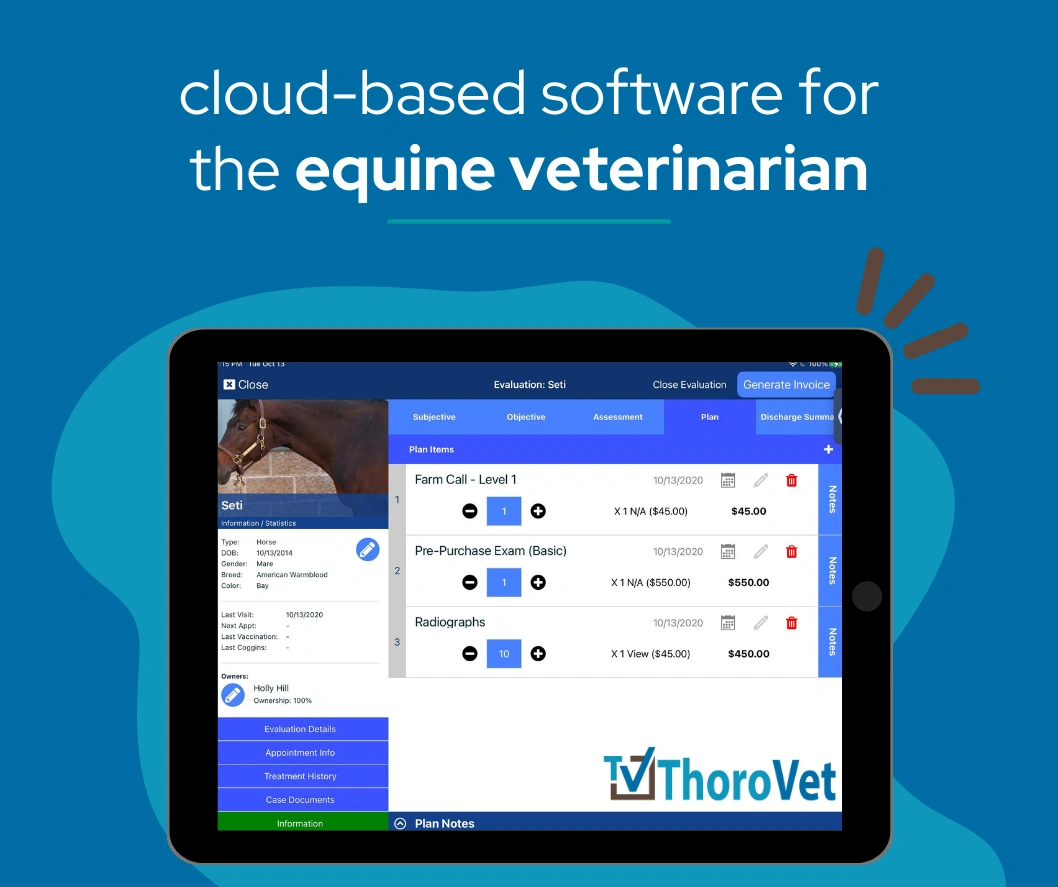
With cloud-based veterinary software, the full patient file opens on a phone or tablet the moment you step out of the truck. Previous lameness exams, vaccine history, dental records, medication sensitivities, and past imaging are all right there. You are not calling the office to have someone read a chart aloud, and you are not making treatment decisions with half the picture.
That matters enormously in equine medicine, where a horse may be seen by different associates, at different locations, over many years. Continuity of care depends on continuity of records, and the cloud is what makes those records portable.
Charting while the details are still fresh
The most accurate medical record is the one written stall-side. When you can chart during or immediately after the exam, you capture the exact dose, the exact lot number, the exact findings, and the exact client instructions. Nothing is reconstructed from memory in the truck three farms later.
That accuracy compounds. Better records mean better follow-up care, cleaner regulatory paperwork, stronger documentation if a case is ever questioned, and far less evening admin. The two hours many equine vets spend catching up on charts after dinner can shrink dramatically when the charting happens in real time.
Invoicing before you leave the property
Missed charges are one of the quietest revenue leaks in ambulatory practice. A tube of dewormer handed over at the trailer, an extra sedation, a bandage change added on while you were there anyway. When billing happens days later from memory, those items disappear.
Cloud systems let you build the invoice as you work and present it before you pull out of the driveway. The client sees exactly what was done and what it costs while the visit is still in front of them. You capture every charge, and the awkward surprise bill two weeks later simply stops happening.
The Client Trust Factor
Horse owners are among the most invested clients in veterinary medicine. They want to understand what is happening with their animal, and they judge their vet partly on how organized and transparent the practice feels.
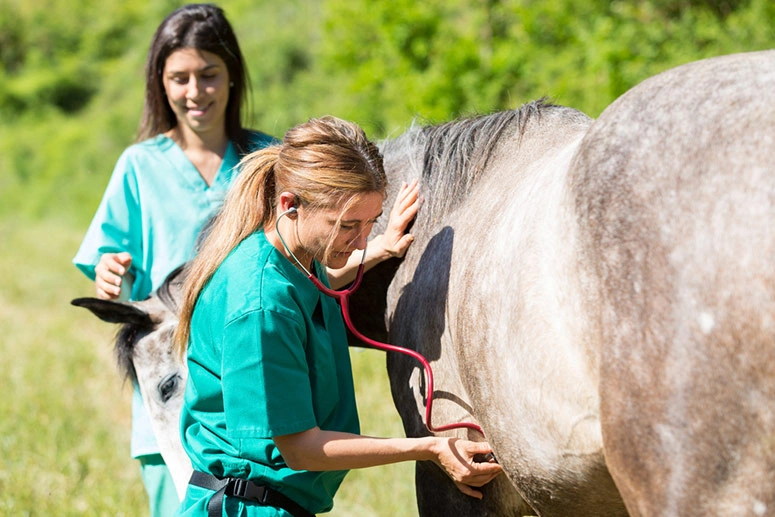
Cloud access changes that experience in visible ways. You can pull up last spring’s radiographs in the barn aisle and show the owner how the joint has changed. You can confirm vaccine dates on the spot instead of promising to check when you get back. You can email the invoice and visit summary before you leave the property. Every one of those moments signals the same thing: this practice has its act together.
Trust is also built in emergencies. When a colic call comes in at midnight, the on-call vet who can open the horse’s complete history from their driveway makes faster, better-informed decisions than one working blind. Clients notice. Referrals follow.
What About Barns With No Signal?
This is the first question every ambulatory vet asks, and it is a fair one. Plenty of farms sit in dead zones.
Modern cloud platforms are designed for exactly this reality. Work gets captured on the device in the field and synchronizes automatically once a connection returns, whether that is at the end of the driveway or back on the highway. The practical standard to look for is simple: you should be able to complete an exam, chart it, and build the invoice regardless of signal, with the system handling the sync in the background. Connectivity should be a convenience, not a requirement.
One System, One Source of Truth
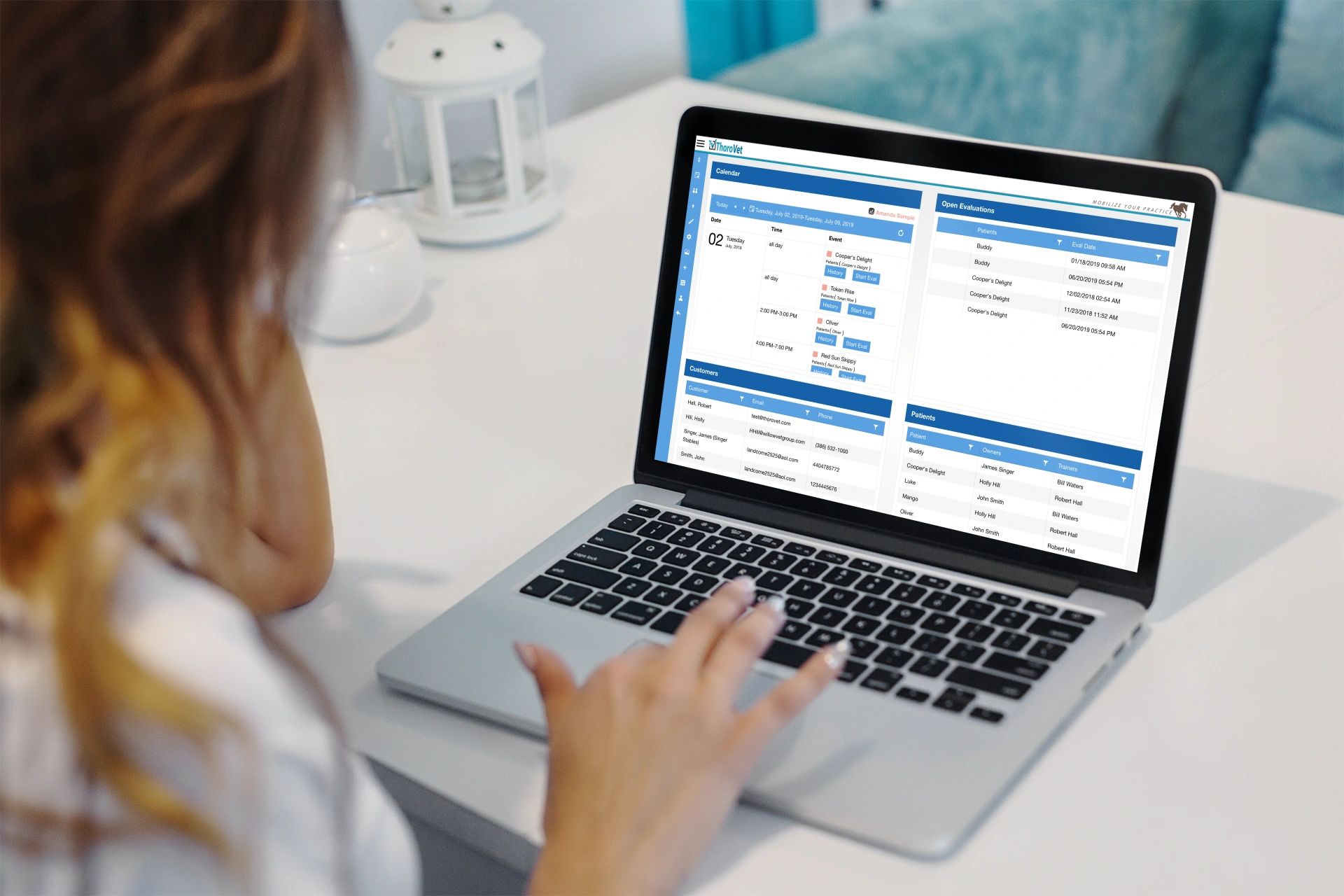
There is a bigger picture benefit beyond the individual farm call. When every vet, technician, and office team member works from the same cloud-based veterinary software, the whole practice runs on a single source of truth. Scheduling changes made from the truck appear instantly at the office. A treatment charted in the field is visible to the associate covering tomorrow. Controlled substance logs, inventory counts, and end-of-day totals stay current without anyone re-entering data.
For practice owners, that visibility is the difference between guessing how the business is doing and knowing. For associates, it is the difference between feeling like a lone operator and feeling like part of a coordinated team.
Built for the Way Equine Vets Actually Work
Generic veterinary software treats ambulatory work as an afterthought. Equine practice deserves better than a small animal system with a mobile app bolted on. The workflows are different: multi-horse farm visits, trip fees and mileage, Coggins and health certificates, performance horse clients with layered ownership, and billing that has to survive a day with no cell service.
ThoroVet was built cloud-first for equine practitioners, which means the field is not an edge case. It is the whole point. Records, scheduling, invoicing, and client communication are designed around the truck, the trailer, and the barn aisle, because that is where equine medicine actually happens.
Bring Your Whole Practice on the Road
Equine medicine has always been mobile. Your software should be too. If your records, invoices, and schedules still live back at the clinic while you spend your day in the field, you are working harder than you need to and leaving accuracy, revenue, and client confidence on the table.
See what a cloud-first platform built specifically for equine vets can do for your practice. Book a ThoroVet demo today and take your next farm call with everything you need in your hand.
Frequently Asked Questions
Is cloud-based veterinary software secure enough for medical records?
Yes. Reputable cloud platforms encrypt data in transit and at rest, run automatic backups, and store records in professionally managed data centers with far stronger protections than a clinic server in a back closet. If a laptop is lost or a truck is broken into, the records remain safe and accessible from any other device.
Can I still work at farms with poor or no internet connection?
Yes. Well-designed cloud systems let you chart exams, record treatments, and build invoices on your device even without a signal, then sync everything automatically once you are back in coverage. Connectivity gaps slow nothing down at the stall side.
How hard is it to switch from a server-based system to the cloud?
Easier than most practices expect. Existing patient and client data can typically be migrated by the software provider, and because cloud systems run in a browser or app, there is no hardware to install or maintain. Most teams are comfortable within a few weeks, and the elimination of evening catch-up work tends to win over skeptics quickly.