

Equine Veterinary Programs Comparison: What to Look for in 2026
Running an equine practice in 2026 looks nothing like it did even five years ago. Ambulatory vets are managing full schedules from their trucks, clients expect digital invoices before you have finished packing up the lameness kit, and insurance claims move at the speed of email. The software you rely on to hold it all together has to keep up.
Yet choosing the right equine vet software is harder than ever. Plenty of vendors now claim to serve horse practices while actually building for small animal clinics with a barn workflow bolted on. This guide walks you through what really matters when you compare equine veterinary programs this year, and how to avoid the common traps that cost practices time, money, and clients.
Why 2026 Is the Year to Get This Right
Equine medicine keeps pushing forward. AI-assisted diagnostics are moving from pilot programs into daily practice, mobile imaging is generating larger files that need faster sync, and younger clients want text updates rather than printed invoices. On top of that, staffing shortages across veterinary medicine mean every minute spent wrestling with clunky software is a minute you cannot spend with patients.
The right platform should quietly do the heavy lifting so your team can focus on horses and horse owners. The wrong one creates friction every single day. If you are still running on a system built ten or fifteen years ago, or a general veterinary program adapted for equine use, this is the year to make a change.
Core Features to Compare in Equine Veterinary Programs
Not every feature carries equal weight for a horse practice. Here are the ones that actually move the needle when you sit down to compare vendors.
1. True Ambulatory Support
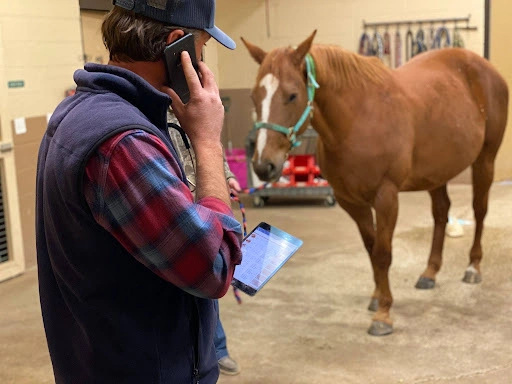
Most equine work happens in a truck, not an exam room. That means your software needs to function beautifully offline, sync the moment you reconnect, and let you chart SOAPs, process payments, and generate invoices right at the farm gate. When you evaluate equine veterinary programs, ask to see the mobile experience first. Not a desktop version squeezed onto a tablet. A workflow actually designed for a vet standing next to a horse with one hand on a stethoscope.
2. Equine Specific Medical Records
Horses are not cats or dogs. Their records need lameness grading scales, dental charts, reproductive cycle tracking, pre-purchase exam templates, Coggins history, and sports medicine notes. Software that forces you to retrofit small animal templates wastes time and creates charting errors. Look for equine vet software that speaks your language right out of the box, with templates your team can customize without calling a developer.
3. Integrated Billing and Field Invoicing
Cash flow is the lifeblood of an ambulatory practice. Your system should invoice on the spot, take card payments in the field, handle split billing between owners and trainers, manage retainer balances, and connect smoothly with your accounting package. Ask every vendor for a live demo of how a farm call becomes a paid invoice. If it takes more than a couple of minutes, keep looking.
4. Client Communication and Automated Reminders
Owners expect text reminders for vaccinations, Coggins renewals, dental floats, and reproductive cycles. They want discharge notes on their phone, not folded into a saddle pad. Good platforms let you automate most of this without sounding like a robot. Even better ones give owners a portal where they can pull their own records, pay outstanding balances, and request appointments.
5. Reporting That Actually Drives Decisions
Revenue per vet, average invoice by service type, client retention by region, inventory turnover, and outstanding AR by age. Your equine vet software should surface these numbers in minutes, not require an export to a spreadsheet. If the vendor cannot show you these reports live during the demo, that tells you almost everything you need to know about how seriously they take the business side of your practice.
Questions Every Equine Practice Should Ask Vendors
Bring the same short list to every demo so you can compare fairly. How does the software work at a barn with no cell signal? Who owns my data, and how do I export it? What is the total cost after fees, payment processing, and add-ons? How long does onboarding actually take, and who trains my team? What does support look like on a Saturday evening when my system goes down?
Where ThoroVet Fits the Picture
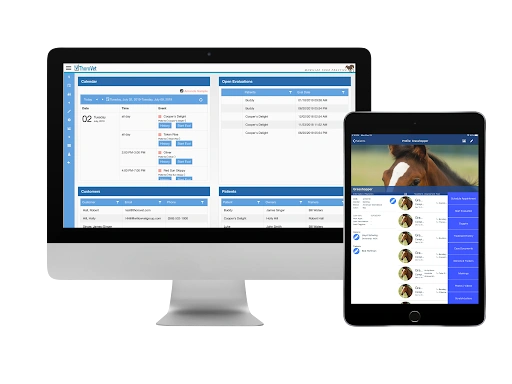
ThoroVet was built by and for equine practitioners, never adapted from a small animal tool. Every feature exists because a horse vet asked for it. From true offline ambulatory support to lameness grading, pre-purchase templates, ReproCycle tracking, integrated field billing, and reporting that actually helps you run a business, ThoroVet gives equine teams a platform that feels like it was designed around their day.
If this guide has you rethinking your current setup, let us keep the conversation going. Schedule a demo to see ThoroVet in action with your own workflow in mind, or request more information, and we will send a detailed overview tailored to your practice. 2026 is a great year to stop working around your software and start working with it.
Frequently Asked Questions
What is the difference between equine vet software and general veterinary software?
General veterinary software is usually built for small animal clinics with workflows based around exam rooms, in-house appointments, and companion animal medicine. Equine vet software is designed around ambulatory practice, horse-specific medical records, barn call logistics, and the way horse owners and trainers actually pay for care. Using general software for an equine practice often means constant workarounds, wasted time, and details that fall through the cracks.
How long does it take to switch equine veterinary programs?
Most practices can make the switch in four to eight weeks, depending on team size and the state of the existing data. A good vendor will handle data migration, run hands-on training with your staff, and keep a support person close during the first month. If a vendor tells you it takes six months, that is a red flag about their onboarding process, not the complexity of your practice.
How much should equine vet software cost in 2026?
Pricing varies widely based on the number of users, the features included, and whether payment processing is bundled. Most serious equine-focused platforms fall somewhere between a few hundred and a couple thousand dollars per month for small and mid-sized practices. Watch for hidden fees around payment processing, text messaging, and client portals, and always ask for a full cost breakdown in writing before signing anything.